
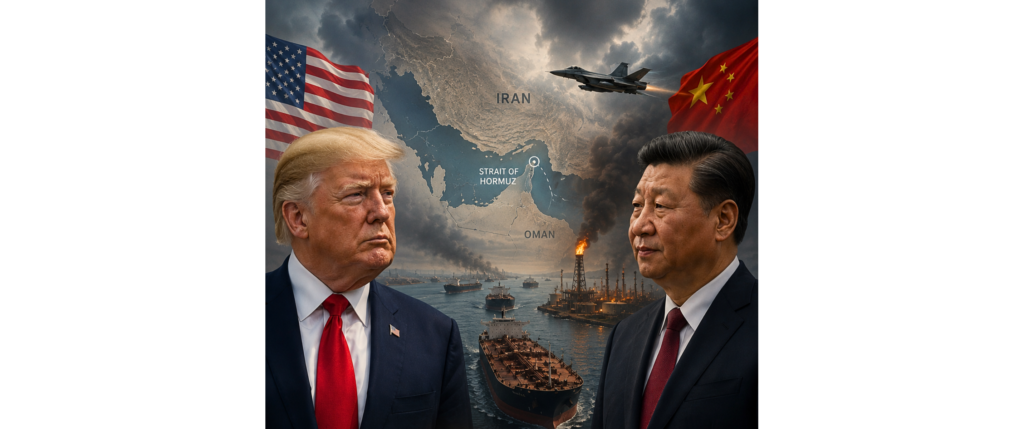
Trump Says He Does Not Need China’s Help to End Iran War
Donald Trump said on Tuesday that the United States does not require China’s assistance to end the ongoing conflict with Iran, even as prospects for a lasting peace agreement continue to fade and tensions escalate in the strategically vital Strait of Hormuz.
Speaking ahead of a high-level summit in Beijing with Xi Jinping, Trump stated that Washington could resolve the conflict independently. “I don’t think we need any help with Iran. We’ll win it one way or the other, peacefully or otherwise,” he told reporters. The remarks come amid ongoing hostilities despite a fragile ceasefire that has shown little progress toward a comprehensive peace deal.
The conflict has significantly impacted global energy routes, particularly the Strait of Hormuz, a key maritime passage through which nearly one-fifth of the world’s oil supply typically flows. Iran has reportedly tightened its grip over the waterway, entering into arrangements with regional countries, including Iraq and Pakistan, to continue shipping oil and liquefied natural gas. Analysts warn that such developments could entrench Tehran’s control over the route.
Meanwhile, US and Chinese officials have reportedly agreed that no single country should impose tolls or restrictions on international maritime traffic in the region, in an effort to maintain stability ahead of the summit. China, a major buyer of Iranian oil, has not publicly challenged this position.
Trump is expected to raise the Iran conflict directly during his meetings with Xi Jinping, with Washington pushing for Beijing to encourage Tehran toward a negotiated settlement. US demands include halting Iran’s nuclear program and ending its control over the Strait of Hormuz, while Iran has called for compensation for war damages, removal of US sanctions, and a broader end to regional conflicts, including in Lebanon.
The US president also made it clear that economic pressures at home are not influencing his decisions regarding the conflict. Despite rising inflation and increasing living costs, Trump emphasized that preventing Iran from acquiring nuclear weapons remains his sole priority. “I don’t think about Americans’ financial situation. I think about one thing: we cannot let Iran have a nuclear weapon,” he said.
Economic data released by the US Labour Department showed that consumer inflation in April rose at its fastest pace in three years, driven by higher food prices, rent, and airfares. At the same time, global oil markets reacted sharply to the ongoing tensions, with Brent crude prices climbing above $107 per barrel as disruptions in the Strait of Hormuz persisted.
The military and financial costs of the conflict are also mounting. The Pentagon has estimated the total cost of the war at $29 billion, marking an increase of $4 billion from previous estimates. The United States Central Command confirmed that the aircraft carrier USS Abraham Lincoln is currently deployed in the Arabian Sea to enforce the US blockade, having redirected dozens of commercial vessels.
Public opinion in the United States appears increasingly critical of the war effort. Recent surveys indicate that a majority of Americans believe the administration has not clearly justified the conflict, raising concerns ahead of upcoming congressional elections. Political analysts suggest that rising energy costs and economic strain linked to the war could influence voter sentiment in the months ahead.
Despite growing criticism, Trump and his allies maintain that the long-term security risks posed by a nuclear-armed Iran outweigh the immediate economic challenges, framing the conflict as essential to both national and global security.